
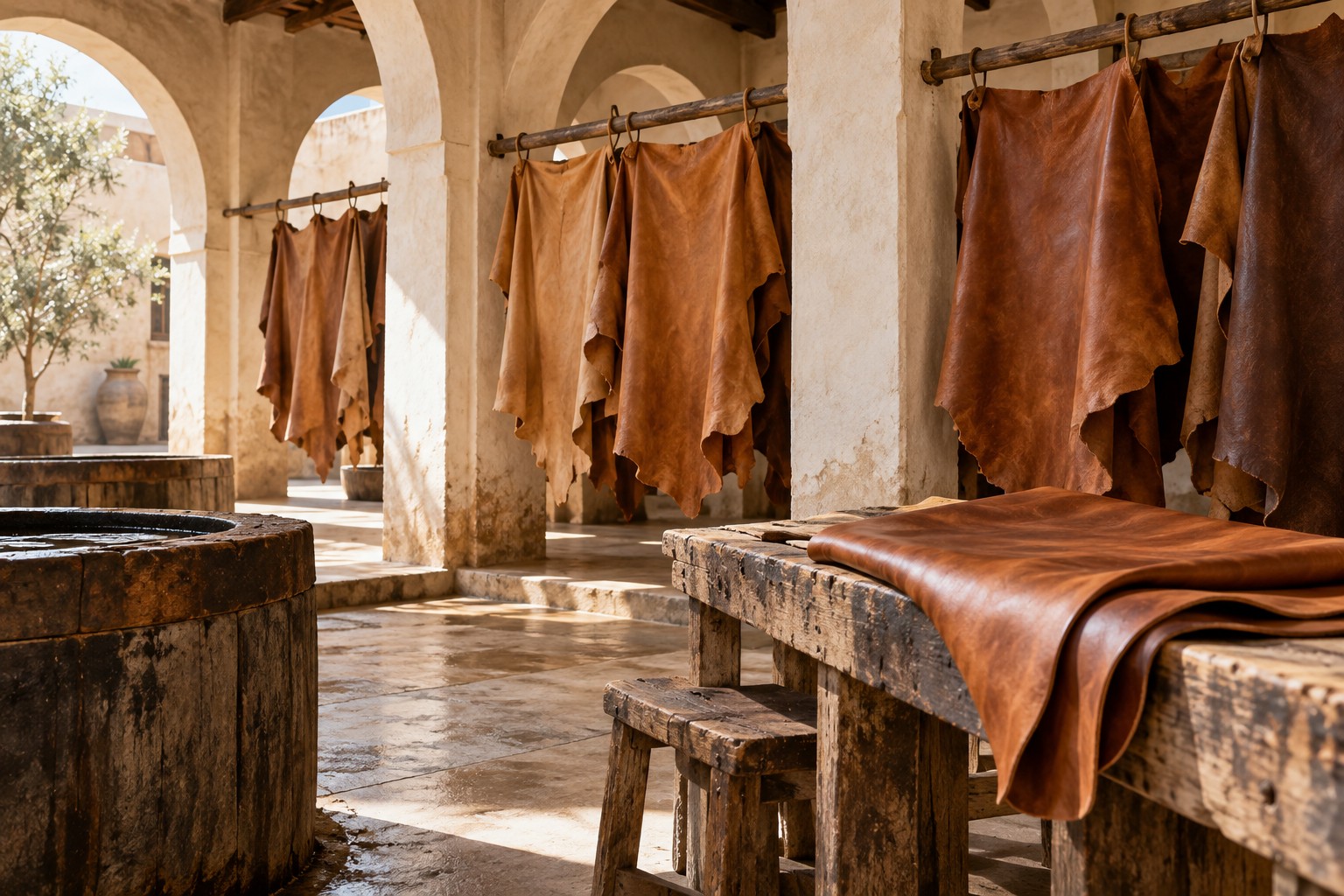
Before it becomes a bound book, document holder or box, a hide must be transformed into leather. Leather tanning stabilises its structure so it can be preserved and used. This work takes place in a tannery, before the workshop cuts, assembles and finishes the product. Understanding the distinction helps define a suitable material for a project.
What is tanning?
Tanning acts on the hide’s collagen fibres to improve their stability. It is different from simply drying a skin. However, tanning alone does not determine every characteristic of finished leather: preparation, subsequent processing and surface finishes also influence its feel and behaviour.
From hide preparation to finishing
Preparation includes soaking, removing residual flesh and, for hair-free leather, unhairing. Further treatments depend on the hide and the intended process. Tanning then stabilises the material. Retanning, dyeing and fatliquoring help adjust its properties before drying and softening.
A surface finish can alter colour, appearance and protection. The same tanning family can therefore produce leathers with different characteristics. Consider the leather type and finish together.
Vegetable tanning and chrome tanning
Vegetable tanning uses plant-derived tannins. It is often associated with leathers that have body and can develop a patina. Chrome tanning uses trivalent chromium salts and can produce leather for many applications, including those requiring suppleness. Chrome-free processes and combinations of treatments also exist.
None of these names alone guarantees final quality, exact colour stability or easy care. Assess the finished leather against the intended use.
From the tannery to the Molacraft workshop
Tanning and leather goods manufacture are separate trades. Molacraft leather goods are crafted in Morocco for clients at home and abroad. Material selection connects leather preparation with craft production; dimensions, assembly, colour and personalisation are then discussed with the workshop. The origin and processing of a particular leather should be confirmed for that material, rather than inferred from where the finished product is made.
What to specify for a corporate order
For leather office accessories, hotel and restaurant accessories or personalised boxes, describe the use: daily handling, light exposure, occasional liquid contact and planned cleaning. Include quantities, colours and the desired marking. This helps assess an appropriate proposal instead of choosing solely by the name of the tanning process.
Related articles
Prepare a bespoke leather order · Leather bookbinding: history and craftsmanship · Leather types: how to choose for your project
Further reading
Leather Working Group — How modern leather is made · Leather Naturally — Leather terminology